Last reviewed November 2026.
Short answer
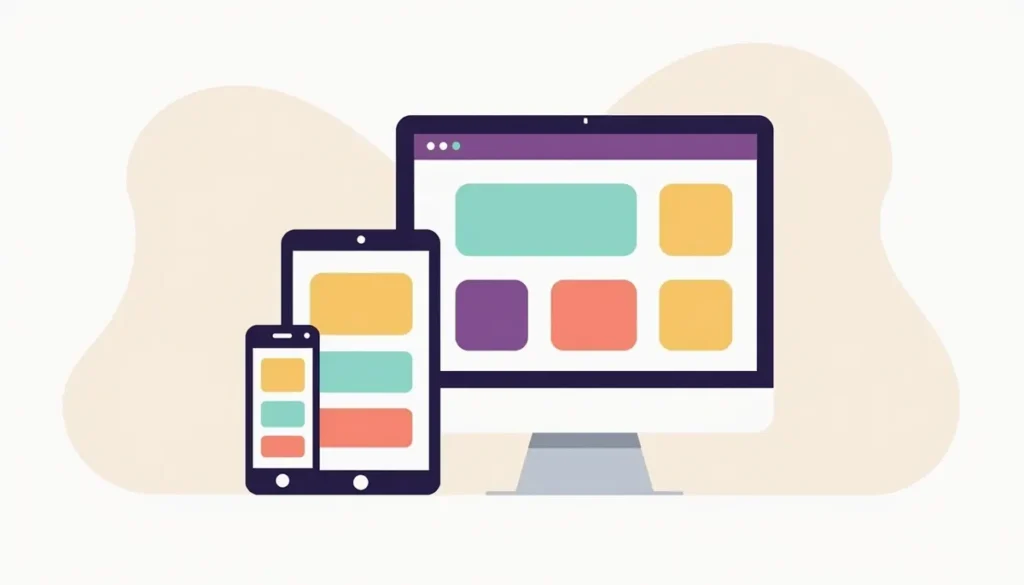
A website is a group of linked pages that explains your whole business. A landing page is one page built for one offer and one action, such as a call or a quote request. Most local businesses need the website first. Add a landing page when you send focused traffic, like ads or email, and want one result.
People say “landing page” and “website” as if they mean the same thing. They do not. The difference changes what you build, what you pay for and where you send visitors.
This guide is part of our landing page guide for small business.
This guide explains both terms in plain words. You get a side-by-side table, a way to choose, and a test you can run today.
In this guide
- What each term means
- Landing page vs website at a glance
- Where the line gets blurry
- Does a landing page have to be separate?
- Can a landing page rank in search?
- Which one do you need first?
- Is your page doing its job? A 10-minute test
- A made-up example with the math
- How the two work together
- Do this today
- Common mistakes
- Frequently asked questions
- Next steps
What each term means
Start with the words.
A website is, in HubSpot’s words, “a group of linked web pages under one domain.” Your home page, service pages, about page and contact page are all part of it. It serves many visitors who want different things.
A landing page is, per the same source, “a single, standalone web page created for a specific marketing or advertising purpose.” It is where someone “lands” after they click an ad, an email or a link. It exists to get one action.
Three more terms help:
- Conversion. The action you want, such as a call, a form or a booking.
- Navigation. The menu and links that let a visitor move around.
- Traffic source. Where the visitor came from, such as search, an ad or an email.
Here is the key idea. Any page can be the first page a person sees. “Landing page” in marketing means a page built on purpose for that first moment.
Landing page vs website at a glance
| Question | Website | Landing page |
|---|---|---|
| What is its job? | Explain the whole business and build trust. | Get one action for one offer. |
| Who visits? | Many kinds of people with many goals. | One kind of person who clicked one thing. |
| Menu and links | Full menu and many links. | Little or none. Only links that help the action. |
| Content | Broad. Covers all services, your story and contact details. | Narrow. Matches one search, ad or message. |
| Where visitors come from | Search, the map, referrals, direct visits and ads. | Often ads, email, social posts or a QR code. |
| How often it changes | Now and then. | Often, as you learn what works. |
| How you judge it | Do people find you and trust you? | How many visitors took the one action? |
Read the table as two jobs, not two rivals. A site builds trust over time. A focused page asks for one thing, now.
Where the line gets blurry
Real businesses do not always fit neat boxes. These cases come up a lot.
- A service page can be a landing page. If a page covers one service, has a clear action and few distractions, it does both jobs. Many small businesses do not need two pages.
- A home page can be a landing page. This works if you sell one thing. It breaks down when you sell five.
- A one-page website is still a website. It is one page, but its job is to describe the business. A landing page is defined by its job, not its length.
- A landing page is not only for ads. You can use one for email, a flyer with a QR code or a text to past customers.
For the ads version of this question, read landing page vs homepage for Google Ads.
Does a landing page have to be separate?
No. You have three choices.
| Where it lives | Good for | Watch out for |
|---|---|---|
| Inside your main site, on your domain | Most local businesses. Keeps your brand, trust and tracking together. | You need to keep it matched to the offer. |
| On a landing page tool | A fast start or a short test. | A different web address, limits on design or tracking. |
| On a separate microsite | A distinct brand or a one-off campaign. | One more site to keep updated and measure. |
For a service business in Central PA, the first choice is usually the simplest. Our guide to a landing page for a local service business covers call versus form.
Can a landing page rank in search?
Sometimes. A page about one service in one town can match what people type into Google. Many service pages work like landing pages. No one can promise a ranking, so do not buy a page on that promise.

Two rules keep you safe.
- Do not make near-copies. Google’s spam policies define doorway abuse as “sites or pages are created to rank for specific, similar search queries.” One example is “creating substantially similar pages.” Ten town pages that differ only by the town name fit that pattern.
- Keep ad-only pages out of search if they repeat a page you already have. Google Search Central explains that a noindex rule can stop a page from appearing in search. The page must not be blocked by robots.txt, or Google will never see the tag. Ask your web team before you change this.
Our small business web design guide covers the site side.
Which one do you need first?
| Your situation | Start with | Why |
|---|---|---|
| No website, or people cannot find basic facts | The website | You need a home for your services, address, phone and proof. |
| You have a site and plan to run Google Ads | A focused page for each main service | Ads promise something specific. The page should deliver it. |
| You have a site but get few calls, with no ads | Better service pages | Fix the pages people already reach before you add more. |
| You email past customers about one offer | A landing page for that offer | One offer, one action. |
| You sell one thing in one place | One strong page may be enough | A small site can do both jobs. |
If you are unsure what your site needs, see what pages a small business website needs and what a home page should include.
Is your page doing its job? A 10-minute test
Run this on your phone. Do it for your home page and for any page you send ads to.
- Open the page in a private window. Start a timer.
- Look at the top of the screen. Can you tell what the business does and where, without scrolling?
- Find the action. Can you call, tap or request a quote within five seconds?
- Count the links. Which ones help the action? Which ones lead away?
- Match it to the source. If you came from an ad, does the page repeat what the ad promised?
- Scroll to the bottom. Is there proof, such as real reviews or photos of your work, and a clear next step?
- Test the form or phone link. Does it work, and who gets the message?
Google gives hints on what it values. Google Ads Help says landing page experience is “one of several factors” in Quality Score. It is shaped by “the usefulness and relevance of information,” “ease of navigation,” “the number of links on the page” and “the expectations users have based on the ad they clicked.” Your test covers each one.
Speed matters too. web.dev lists “good” targets for the 75th percentile of page loads: Largest Contentful Paint within 2.5 seconds, Interaction to Next Paint of 200 milliseconds or less, and Cumulative Layout Shift of 0.1 or less. Read more in our guide on landing page speed and mobile.
A made-up example with the math
This example is made up. The numbers are round and not from a real business or a forecast. Use it to learn the method, then use your own numbers.
Picture a small HVAC company in Carlisle. It spends $1,200 in a month on ads for furnace repair. Each new job earns $400 in gross profit, which is what is left after labor and parts.
| Step | Made-up figure | Math |
|---|---|---|
| Ad spend | $1,200 | Set by the owner |
| Price per click | $8 | Assumed for this example |
| Clicks | 150 | $1,200 ÷ $8 |
| Option A: send clicks to the home page | ||
| Calls and forms | 4 | About 1 in 40 clicks acts |
| Jobs won | 2 | Half of the contacts book |
| Gross profit | $800 | 2 × $400 |
| Result | −$400 | $800 − $1,200 |
| Option B: send clicks to a furnace repair page | ||
| Calls and forms | 10 | About 1 in 15 clicks acts |
| Jobs won | 5 | Half of the contacts book |
| Gross profit | $2,000 | 5 × $400 |
| Result | +$800 | $2,000 − $1,200 |
The rates are guesses to show the method. Your real rates will differ, and we cannot promise a gain. The lesson is that the page changes what the same click is worth. Track calls and forms for each page so you learn your own numbers. Our ad budget reality check can help you see what a month of ads needs to earn.
How the two work together
Think of a path with four steps.
- The ad or search result promises something specific.
- The landing page delivers that promise and asks for one action. See what makes a landing page convert for a seven-part check.
- The thank-you page confirms the action and sets expectations. Read about thank-you pages.
- The website backs up your claim for people who want to look around. Many people check a business out before they call.
A visitor who is not ready may come back through your site later. Both pages help, in different ways. For planning the spend behind the clicks, read how much to spend on Google Ads.
Want a landing page built for your ads? We design and build them for local service businesses. See our landing page design.
Do this today
- Write down the one action you want from each kind of visitor.
- List where your traffic comes from: search, the map, ads, email, referrals.
- Pick the page that gets the most paid or campaign clicks. Run the 10-minute test on it.
- Fix the first fail. It is often the phone number, the headline or the form.
- Decide whether a service page can do the job. If not, write a one-page brief. Our landing page brief template helps.
Common mistakes
| Mistake | Why it hurts | Fix |
|---|---|---|
| Sending every ad to the home page | The visitor has to hunt for the thing they clicked. | Send each ad to a page about that one service. |
| Building a landing page before you have a site | You have no place to prove who you are. | Cover the basics first. |
| Keeping the full menu on a campaign page | Visitors leave before they act. | Keep the logo, phone and one action. |
| Making many near-copy town pages | Google’s spam policies warn against it. | Write real, different pages or fewer pages. |
| Buying a separate domain for no reason | Trust and tracking split in two. | Use your own domain. |
| Letting old campaign pages go stale | Old prices and offers lose trust. | Review each page on a set date and remove what you no longer use. |
| Judging by visits | Visits do not pay bills. | Count calls, forms and booked jobs. |
| No tracking on the page | You cannot tell what worked. | Follow our guide to conversion tracking. |
For more, see landing page mistakes.
Frequently asked questions
What is the main difference between a landing page and a website?
A landing page is one page built for one offer and one action. A website is a group of linked pages that describe your whole business. HubSpot defines a website as “a group of linked web pages under one domain.” The landing page is one page inside that bigger picture, or a standalone page.
Is a landing page a website?
Not by itself, though it can live on a website. A landing page is defined by its job, not its size. A one-page site is still a website. A page that exists only to get one action from one offer is a landing page, whether it sits on your domain or a tool.
Do I need a landing page if I already have a website?
Only if you send focused traffic and want one action. If you run ads, send emails or hand out a QR code, a focused page usually beats your home page. If people only find you by name, better service pages may be enough for now.
Can a landing page rank on Google?
Sometimes, but no one can promise it. A page about one service in one town can match what people search for. Keep it useful and not a near-copy of other pages. Google’s spam policies warn against substantially similar pages made to rank for similar searches.
Should my landing page be on my own domain?
Usually yes. A page on your own domain keeps your brand, your trust and your tracking in one place. A separate tool or microsite can work for a short test. It adds one more thing to keep accurate and to measure.
Should a landing page have a menu?
Keep it short or remove it. Extra links give a visitor ways to leave before they act. Google Ads Help lists ease of navigation and the number of links on the page as parts of landing page experience. Keep the logo and your phone number visible.
Is my home page a landing page?
It can be, if you sell one thing and the page has one clear action. Most businesses offer several services. For ads about one service, a page about that service gives the visitor what the ad promised, so it usually works better.
How many landing pages does a small business need?
Start with one for your best-paying service, then add more only when you can keep each one accurate. A few good pages beat many stale ones. Add a page when you have a real new offer or a real new campaign, not to fill space.
Next steps
Build or fix the website first so people can trust you. Add a focused page when you send focused traffic. Test on a phone. Count the actions.
If you want a second pair of eyes, we are happy to look at your pages with you. There is no pressure to hire us. You can also start free with our website teardown.
Keep reading
- Landing Page Guide for Small Business: Build One That Converts
- Landing Page for a Local Service Business: Call or Form?
- What Makes a Landing Page Convert? 7 Parts to Check
- How to Brief a Landing Page: A Fill-In Template
- Landing Page Design services
Want a landing page built for your business?
Webfactory Media is a digital marketing agency in Carlisle, PA. We design and build landing pages for local businesses, and we start with a conversation about your offer, your customers and your numbers.