Last reviewed November 2026.
Short answer
If you need calls this month, start with Google Ads (PPC). If you can wait several months for leads with no fee per click, start with SEO. Ads stop when you stop paying. SEO gives leads with no fee per click. Using both can make sense once you have fixed your website and Google Business Profile.
SEO and PPC both put your business in front of people who are already searching. They work in very different ways. This guide explains each one in plain words, compares them side by side, and gives you a simple way to choose for a local service business.
This guide is part of our local SEO guide for small business.
In this guide
- What SEO and PPC mean
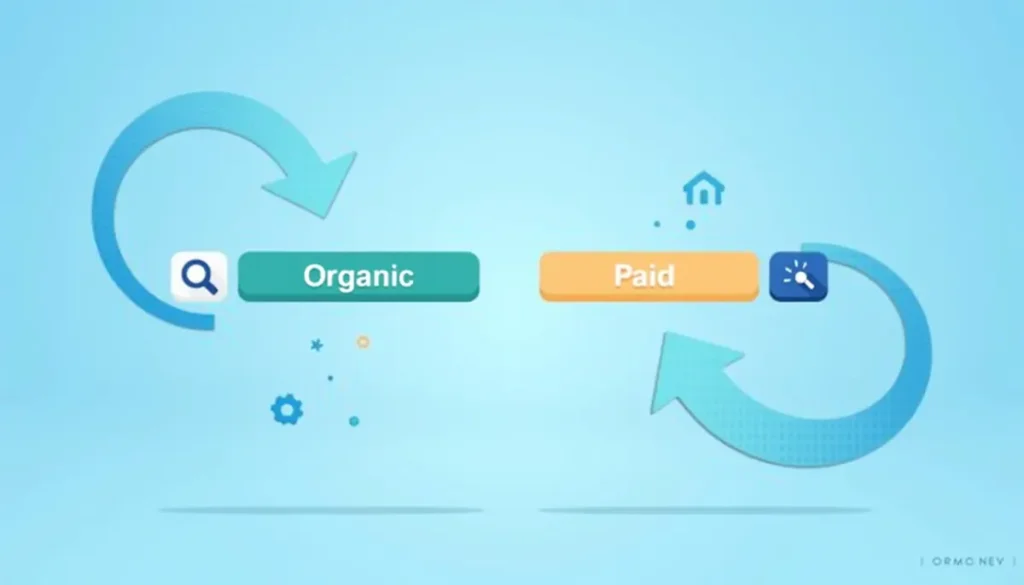
- SEO vs PPC at a glance
- Speed: how fast each one works
- Cost: how you pay for each one
- Control and durability
- Do ads help your SEO?
- The local angle: the map and Central PA
- Local Services Ads: a third option
- Which should you start with?
- A readiness checklist before you spend
- How to decide in one week
- A made-up example with the math
- How to use both together
- Test it yourself today
- Common mistakes
- Frequently asked questions
- Next steps
What SEO and PPC mean
Start with the words, because they get mixed up a lot.
SEO is short for search engine optimization. It is the work of helping search engines understand your pages so the right people find them. Google’s SEO Starter Guide describes it as “about helping search engines understand your content.” The results you earn this way are called organic results. You do not pay Google for them.
PPC is short for pay-per-click. You pay each time someone clicks your ad. On Google, the tool for this is Google Ads. Your ad can show above or below the organic results.
Two more terms you will see:
- Map pack. The short list of local businesses with a map that Google shows for many searches with local intent. Your Google Business Profile feeds it.
- Lead. A call, form or message from a person who wants your service. Count leads, not clicks.
- Landing page. The page a visitor sees first after clicking. Good ads need a page built for one offer and one action.
Here is the key idea. With SEO you work to earn a spot. With PPC you bid for a spot. Neither guarantees a customer. Both only bring a person to your door. What you do next decides if they call.
SEO vs PPC at a glance
| Question | SEO (organic) | PPC (Google Ads) |
|---|---|---|
| How do you pay? | For the work: pages, fixes, listings, reviews. No fee per click. | Per click, paid to Google, plus any fee for managing the account. |
| How fast can it start? | Slow. Google says changes can take hours to several months to show. | Can start once the campaign is approved and running. |
| What happens when you stop? | Gains can last, but rankings can slip if you stop or others improve. | Ads stop showing the moment spending stops. |
| How much control do you have? | You influence results. Google decides what to show. | You pick keywords, message, area, schedule and budget. |
| Where do you show up? | Organic results and the map pack. | Paid spots, marked as ads. |
| What does it need from you? | A site that can be improved, a complete profile, content, patience. | A budget, a focused page, call and form tracking, regular review. |
| What can go wrong? | Slow progress. Effort spent on the wrong pages. | Wasted clicks on searches that do not fit. Costs that rise in a crowded market. |
Read the table as trade-offs, not as winners. Each row has a cost and a benefit. The rest of this guide goes through the rows that matter most.
Speed: how fast each one works
PPC is the faster tool. Once an ad is approved and your budget is on, people can see it and click it. That is why ads suit a slow month, a new service or an offer with an end date.
SEO is slower, and nobody can give you an exact date. Google’s SEO Starter Guide says it plainly: “Some changes might take effect in a few hours, others could take several months.” That range is wide for a reason. How long it takes depends on your site, your market and what you change.
Be wary of anyone who promises a ranking by a certain date. Google Search Central suggests asking any SEO what results to expect and in what timeframe. A good answer is honest about what they cannot control. For our own take, read how long SEO takes.
What “fast” does not mean
- Fast does not mean cheap. A click in a crowded market can cost a lot.
- Fast does not mean good. An ad that sends people to a weak page still loses the lead.
- Slow does not mean useless. Pages you build now can keep working for a long time.
Cost: how you pay for each one
How PPC charges
Google Ads runs an auction each time someone searches. Google Ads Help says it “determines which ads should show with a lightning-fast ad auction.” Your bid is “the maximum amount you’re willing to pay for a click on your ad,” and you often pay less than that.
Six things decide if and where your ad shows: your bid, the quality of your ad and landing page, the expected impact of ad assets, Ad Rank thresholds, the context of the search, and how competitive the auction is. In plain words, a higher bid helps, but a clear ad and a useful page help too.
How the budget works
You set an average daily budget. Google Ads Help defines it as “the amount you’re willing to spend each day, on average, for each ad campaign in your account.” Then comes a detail many owners miss. Google says “your actual spend on any given day may exceed your average daily budget by up to 2 times.” Over a month, charges are limited to 30.4 times your daily budget.
So a $50 daily budget does not mean you will spend exactly $50 every day. It means about $1,520 in a month at most (30.4 × $50). Plan for that.
How SEO charges
SEO has no fee per click. You pay in work instead. That work can be your own time, a freelancer or an agency. It covers things like clear service pages, a complete Google Business Profile, reviews, listings and fixes to your site. Prices vary a lot, so ask for a written scope. Our guide to SEO costs lists what to expect in a quote, and how to choose an SEO company lists red flags.
The right way to compare cost
Do not compare monthly bills. Compare the cost to win one customer. Divide what you spent by the jobs you won. For ads, that is easy to measure if you track calls. For SEO, it takes longer to see, because the work pays off over many months. We show the math in the example below.
Control and durability
Control. Ads give you a lot of it. You choose the words you want to appear for, the towns you cover, the hours your ads run and the daily budget. You can pause at any time. SEO gives you less. You can improve your pages, but Google decides what to show.
Durability. Ads end when you stop paying. SEO is different. A page that ranks keeps showing without a fee per click. But durable does not mean permanent. Competitors improve, Google changes how it shows results, and pages go stale. Think of SEO as a base you have to maintain, and ads as a tap you can open and close.
| Trait | PPC | SEO | What it means for you |
|---|---|---|---|
| Control | High | Medium to low | Use ads when you need to steer fast. |
| Durability | Ends with the budget | Longer, but not permanent | Use SEO to build a base. |
| Predictability | Higher, once you have data | Lower | Ads are easier to plan month to month. |
| Fee per visit | You pay for every click | No per-click fee | Ads cost money for each visit. SEO has no click fee, but it takes work and time. |
Do ads help your SEO?
No, and this is a common myth. Google Search Central says: “Advertising with Google won’t have any effect on your site’s presence in our search results.” It also says: “Google never accepts money to include or rank sites in our search results.”
The same is true on the map. Google Business Profile Help says: “There’s no way to request or pay for a better local ranking on Google.”
So ads will not raise your organic rank. And a good organic rank will not lower what you pay per click. The channels are separate systems. They help each other in other ways, which we cover below. And if anyone tells you that paying for ads will lift your rankings, treat that as a red flag.
The local angle: the map and Central PA
For a local service business, the map can matter as much as the blue links. For many local searches, Google shows a map pack. Google Business Profile Help says local results are mainly based on relevance, distance and popularity. Relevance is how well your profile matches the search. Distance is how far you are from the searcher. Google defines prominence, the third factor, as how well known a business is.
You cannot change distance. You can improve the other two. Fill out every part of your profile, pick the right categories, list your services, add real photos, and ask happy customers for reviews (our guide on how to get more Google reviews shows how). Our Google Business Profile checklist walks through it, and how to rank in Google Maps explains what moves the local pack. Our local SEO guide for Carlisle and Central PA covers the rest.
What this means in Central PA
- You may serve several towns, such as Carlisle, Mechanicsburg, Camp Hill, Hershey and Harrisburg. A shop in one town is closer to searchers there. Service pages for each town help you earn the others. See SEO for service area businesses.
- Some trades have busy and slow seasons. Ads can fill a slow stretch. Pages built ahead of a busy season are in place when demand arrives.
- Your market is smaller than a big city. We cannot promise results, but the playing field is not the same as in a large metro.
Local Services Ads: a third option
Local Services Ads (LSAs) sit between PPC and SEO in how they feel. They are ads, so they stop when you stop paying. But they charge in a different way. Google’s Local Services Ads page describes standard Google Ads as “pay-per-click text ads open to any business” and Local Services Ads as “pay-per-lead listings for verified local service providers.” It also says: “You only pay when potential customers get in touch through your ads on Local Services Ads.”
To use them, your business must pass Google’s screening and verification. Check whether your trade and area are eligible. If you are, they are worth a look next to standard ads. Read Local Services Ads vs Google Ads for the differences.
Which should you start with?
Use this table to match your situation. It is a guide, not a rule. If two rows fit you, read both.
| Your situation | Start with | Why | Watch out for |
|---|---|---|---|
| You need calls in the next 30 days | PPC | Ads can start once approved and running. | Have a focused page and call tracking ready first. |
| You have a slow season coming and a team that can take more work | PPC | You can turn spend up or down. | Do not pay for clicks you cannot answer. |
| You are testing a new service and do not know if people search for it | PPC | Ad data shows which searches get calls. | Treat the first weeks as a test, not a verdict. |
| You can wait several months and have a small monthly budget | SEO | Work now can keep paying off. | Set a review date. Judge by calls, not only rankings. |
| Your profile is thin or your site is missing service pages | Fix these first, then SEO | Both channels send people to these. | Ads sent to a weak page waste money. |
| Each job is low in value | SEO, plus the free basics | Paying for every click is hard to justify. | Check the math with your own numbers. |
| You are in a crowded market and need steady leads | Both | Ads fill the gap while pages build. | Track each channel so you can see what works. |
| You are a verified home or business service provider | Look at LSAs and SEO | LSAs charge per lead. | Check eligibility for your trade and area. |
If you want a quick sense of the money side, try our ad budget reality check. It helps you see what a month of ads might need to earn.
A readiness checklist before you spend
Money spent on either channel is wasted if the basics are missing. Run this check first. Fix any row marked “fail” before you pay for more traffic.
| Check | Pass if | Fail if |
|---|---|---|
| Phone number | It is at the top of every page and taps to call on a phone. | It is hidden, or only in the footer. |
| Page for each service | Each main service has its own page that answers the search. | One page tries to cover everything. |
| Page speed on a phone | The page loads fast on a normal phone connection. | It is slow or jumps around while loading. |
| Google Business Profile | Name, address, phone, hours, categories and services are filled in and match your site. | Details are missing or differ from your site. |
| Reviews | You have recent reviews and you reply to them. | Few reviews, or none in the past year. |
| Tracking | You can tell which calls and forms came from which source. | You only see total traffic. |
| Phone answered | Someone picks up or calls back fast. | Calls go to voicemail for hours. |
| Job value known | You know what one new customer is worth. | You are guessing. |
Tracking deserves a note. Google Ads can measure calls from your website, and it lets you set a minimum call length so very short calls do not count. We explain the setup in call tracking for Google Ads and what to track in Google Ads.
For the page side, see landing page vs homepage for Google Ads traffic. If your site needs work first, our web design team can help.
How to decide in one week
Here is a simple plan you can follow without hiring anyone.
- Day 1: Write down what one new customer is worth. Use gross profit, which is what is left after materials and labor.
- Day 2: Count how many more jobs you can handle each month. There is no point in buying leads you cannot serve.
- Day 3: Run the readiness checklist above. Mark each row pass or fail.
- Day 4: Do the search test below. See who shows up for your main service in your town.
- Day 5: Check your timeline. If you need leads within 30 days, ads come first. If not, SEO can lead.
- Day 6: Set a test budget. Choose an amount you can lose without harm, and a date to review it.
- Day 7: Pick one starting move and write down how you will measure it. Calls and booked jobs are the measures that count.
Not sure which to fund first? We can look at your market and your budget with you. See our SEO services for small businesses and our pay-per-click advertising, or if you are in Central PA, our SEO in Carlisle, PA page.
A made-up example with the math
This example is made up. The numbers are round and are not from a real client or a forecast. Use it to learn the method, then use your own numbers.
Picture a small drain and sewer company in Carlisle. It wants more calls this season. Each new job brings in $500 of gross profit, which is money left after labor and materials. The owner tests ads for a month.
| Step | Made-up figure | Math |
|---|---|---|
| Monthly ad budget | $1,500 | Set by the owner |
| Average price per click | $10 | Assumed for this example |
| Clicks bought | 150 | $1,500 ÷ $10 |
| Calls from clicks | 15 | 1 in 10 clicks leads to a call |
| Jobs booked | 6 | 4 in 10 calls book (15 × 0.4) |
| Gross profit from jobs | $3,000 | 6 × $500 |
| Left after ad spend | $1,500 | $3,000 − $1,500 |
| Cost to win one job | $250 | $1,500 ÷ 6 jobs |
Now see how fragile this is. If only 1 in 20 clicks led to a call, the owner would get 7.5 calls and 3 jobs. Gross profit would be $1,500, which only covers the ad spend. Same budget, half the result. That is why the page, the phone and the tracking matter as much as the bid.
The SEO side of this plan looks different. The owner would spend time or money on service pages, the profile and reviews. There is no per-click bill, but also no way to say when the calls will come. A fair test is to review calls and booked jobs after a set number of months, and to compare that with the cost of the work. The owner could not promise a result, and neither could we.
How to use both together
Many local businesses end up using both. Here is how they help each other.
- Use ad data to pick SEO pages. The search terms report shows which searches led to calls. Build pages for the best ones. Our guide to reading your Google Ads report shows the numbers that matter.
- Use ads to cover the wait. While pages build, ads can bring in calls.
- Keep the same message. The wording on your ad, your page and your profile should match. A visitor should feel they are in the right place.
- Show up twice. A business that appears in the ads and in the organic or map results gets more chances to be seen. We cannot promise this will raise calls, but it is a fair thing to test.
- Adjust slowly. If calls from organic search and the map grow, lower ad spend in small steps. Watch booked jobs for a few weeks after each step.
A sister guide, Google Ads vs SEO for a Local Business: Which Comes First?, looks at the order of operations in more detail. For paid search help, see our pay-per-click ads service. For the organic side, see our SEO services.
Test it yourself today
You do not need a tool for this. It takes about fifteen minutes.
- Open a private or incognito browser window on your phone.
- Search for your main service plus your town, such as “plumber Carlisle PA.” Then try a nearby town.
- Count the ads at the top. Write down who they are and what their ads say.
- Look at the map pack. Write down who is there, their review counts and their star ratings.
- Scroll to the organic results. Note which pages show up and whether they are service pages or home pages.
- Find your own business. Is it in the ads, the map pack, the organic results, or none of them?
- Click two competitor pages. Ask: could a visitor call in five seconds?
Now you know where the gap is. If your competitors fill the ads and you are missing from the map, a profile fix may be the best first step. If the organic results are weak pages, a good service page may be a fast win. If no one is advertising, ask why. There may be little demand, or an open spot.
Common mistakes
| Mistake | Why it hurts | Fix |
|---|---|---|
| Sending ad clicks to the home page | Visitors have to hunt for what they came for. | Send each ad to a page about that one service. |
| Running ads with no call tracking | You cannot tell which calls came from ads. | Set up call and form tracking before you spend. |
| Judging by clicks | Clicks do not pay the bills. Jobs do. | Track calls, forms and booked jobs. |
| Quitting SEO after a few weeks | Google says changes can take months to show. | Set a review date several months out and keep the work going until then. |
| Believing ads lift your rankings | Google says ads do not affect organic results. | Treat the channels as separate and plan for each. |
| Ignoring the Google Business Profile | It is free and feeds the map. | Complete it before you buy anything. |
| Letting ads run without search term checks | Money goes to searches that do not fit. | Review search terms often and add negative keywords. |
| Paying for leads you cannot answer | Missed calls waste the spend. | Set a plan for who picks up and how fast. |
| Hiring on a promise of rankings | No one controls Google’s results. | Ask what they expect and in what timeframe, as Google suggests. |
If your ads already run and calls are not coming, read why your Google Ads are not converting. It lists nine causes to check.
Frequently asked questions
Is SEO or PPC better for a local business?
Neither is better in every case. PPC (Google Ads) is better when you need calls this month. SEO is better when you can wait and want leads that do not cost a fee per click. You may end up using both over time. Start with the one that fits your cash, your timeline and your market.
Is SEO cheaper than PPC?
Not always. SEO has no fee per click, but the work costs time or money, and results take longer. PPC charges per click, so cost rises and falls with spend. Compare them by cost per customer, not cost per month. See our guides on what SEO costs and how much to spend on Google Ads.
How long does SEO take compared to PPC?
PPC can start once your campaign is approved and running. SEO is slower and has no fixed timeline. Google says some changes “might take effect in a few hours, others could take several months.” Plan for months, not days, and check progress against calls and forms, not only rankings.
Does running Google Ads help my SEO?
No. Google states that advertising with Google will not affect your site’s presence in its search results. Ads and SEO are separate systems. They can still help each other in practice, because ad data shows which searches lead to calls, and that tells you which pages to build.
Can I stop paying for ads once I rank organically?
You can, but plan for a drop in calls. Ad traffic stops when you stop paying. Organic rankings can last, but they can also slip. Lower your ad spend in small steps and watch calls and booked jobs for a few weeks before you cut further.
What is the difference between Google Ads and Local Services Ads?
Standard Google Ads charge per click. Local Services Ads charge per lead and are open to verified local service providers. Google says you only pay when someone gets in touch through the ad. Check whether your trade and area are eligible. Our guide on Local Services Ads vs Google Ads has more.
Should a new business start with SEO or PPC?
A new business usually needs both a quick start and a base. Fix your website and Google Business Profile first, because both channels depend on them. Then start with a small, tracked ad campaign if you need calls soon, and build SEO pages alongside it so you rely less on ads over time.
Can I do SEO or PPC myself?
Yes, to a point. You can finish your Google Business Profile, ask for reviews and write clear service pages on your own. Ads are easier to waste money on, because bids, search terms and tracking need regular care. Many owners run the basics themselves and hire help once the work takes more than a few hours a week.
Next steps
Here is the short version. Fix your phone number, profile and service pages. Know what a customer is worth. Choose the channel that fits your timeline. Track calls. Review on a set date.
If you want a second pair of eyes, we are happy to look at your market and your site with you. There is no pressure to hire us. You can also start with a free tool: our website teardown shows what a visitor sees on your site.
Related guides
- Local SEO for Small Business: A Plain Guide
- How Much Does SEO Cost for a Small Business?
- How Long Does SEO Take? What to Expect in the First Months
- How to Choose an SEO Company: Questions to Ask and Red Flags
- SEO services for small businesses
Want help with your SEO?
Webfactory Media is a digital marketing agency in Carlisle, PA. See our SEO services, ask for a free marketing review, or call (888) 849-2397.